Thursday, May 26, 2016

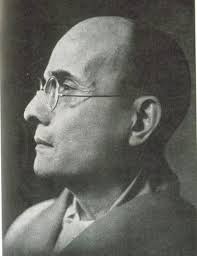
V.D. Savarkar - the underrated Freedom Fighter, Litterateur and Seer - A Tribute on his 133rd Birth Anniversary

I was party to a discussion on India's Freedom Struggle during my Post Graduation at IMT Ghaziabad. Various topics, events, persons were being discussed when I brought up Savarkar. A few were clueless and one of them said, "I have heard about him, he is the same guy who ran away when the British caught him". Being brought up and educated in the state of Maharashtra where Savakar is considered an institution, a shraddha-sthaan,  I was bound to get hurt and offended by the statement. But more than that I felt sorry for this group's ignorance about Savarkar. I was in front of a group most of whom had no knowledge on Savarkar, while a few were misinformed about him. I would not blame them for this, considering that I would have been equally ignorant had I been raised anywhere else. I explained the Saga of the Marseilles Leap in 1910 which mesmerized the group. However, what still hurts is that most of my countrymen are still unaware or misinformed on this Hero of our Independence. May be because of the conscious efforts to wipe his work off history. And we all know who is to be blamed for this.

Vinayak Damodar Savarkar iss considered as the leader of the Indian revolutionaries who fought Britishers with weapons in parallel to the non-violent movements led by Gandhi. Savarkar had set his goal of the nation's freedom from British Raj at a very early age when he got to know of the hanging of Chapekar Brothers. He was influenced by Lokamanya Tilak's literature but was arguably against the mildness of his approach towards freedom. The formation of Abhinav Bharat, foundation of India House in London with the help of  Shyamji Krishna Varma, the arrest in London followed by the escape attempt in France, the life sentence in Andaman are some of the highlights of Savarkar's work as a freedom fighter.

Fondly known as Tatyarao, he was more than just a freedom fighter. His books like Hinduttva, Hindu Pad Paadshahi, novels like Kale Paani, Moplyanche Band, autobiography - Majhi Janmathep are till date considered the most enriching pieces in Marathi literature. Plays like Sanyastha Khadga, Ushhap, Uttarkriya establish his finesse as a playwright. The complex verses in Kamla Kavya written during his life sentence at Andaman were beyond Marathi Poetic Grammar and were later classified under Vainayak Vrutta in his honor. He was fluent in many languages including Gurumukhi and Bangla. Savarkar was an atheist and did not believe in rituals. He was a proposer of Rashtravaad over Dharmavaad (nationalism over religion). To most people's ignorance, his book Hinduttva is not based on Hinduism. As per him Hinduttva is a way of life which is being practiced in the entire of Indian Subcontinent. But political vultures on both sides dragged the book under religion for appeasement and political mileage. None of the so called learned people would have read it before categorizing/criticizing it.

Savarkar was a socialist who was against the caste system. Post the completion of his prison sentence, he led various social movements seeking equal rights for downtrodden. When he met Gandhi, he proposed abolition of caste system, but the latter believed that the social balance would fall if caste system is abolished. The rest is known to all on how caste system continues in the roots of our societies and how it eats up the development. The dialogue in the play Sanyastha Khadga "25 years or 2500 years, the weapons will continue to rule the world" confirms him as a seer given the current state of affairs. The world so far has always been unfair to seers and philosophers. This places him is the league of Socrates, Copernicus, Saint Tukaram and many more. Post independence, he was held as a political prisoner as a co-accused in Gandhi murder and was later acquitted. The nation thus did a great dishonor to all his thankless services and hardships he took for the betterment of society.

Recently I was discussing with a cousin who is 10 years younger to me and studies in Goa. To my surprise, she has never been taught the Indian Struggle for Independence in the subject of History. It is beyond logic why governments in this country want our children to know about people who ruled India (the Mughal Emperors and their era) rather than those who freed India. There are countries who have cherished heroes like Lenin, Joseph Mazzini and prospered on their legends and here we are trying to keep our future generations aloof from personalities like Savarkar who were the building blocks of Indian society in the century gone by. As they truly say, 'Till the time a lion writes, every story will glorify the hunter'. Unfortunately, Savarkar was the hero we had but the hero we did not deserve.


PS - Savarkar has a separate space in Marathi literature called Savarkar Vangmay. It would not be possible to cover his works and persona in a small blog. The intent of this blog is to make people aware of his existence. The readers are requested to read or surf about Savarkar to explore more based on interest.

Thursday, May 12, 2016

There's always a next time

A car commercial used to play on TV in my childhood which showed a father picking up a son from school. The son tells his father with a sorry face about his results in the exam. The father silently drives the car listening. The son anticipates a scolding but at the end of a long drive, the father says - "It's OK son! There's always a next time". The line feels so hopeful and motivating. It almost acts as an energizer during any setback in my life. I remember my father quoting the line from this commercial on most instances of turbulence in my studies. The unfortunate fact is that this simple hopeful funda to tackle failures in life is not known to many and the ignorance leads them to the dreadful act of a suicide.

The idea of a suicide disturbs me. The mental set-up of a person attempting a suicide is beyond my comprehension. The person might think that life is out of control and cannot be brought on track by any measures. However, one's life has a lot of aspects and avenues and it is highly unlikely that all those aspects or avenues are in turmoil which lead the person to the 'crime'. Yes, I will categorically mention it as a crime without an ounce of sympathy for the person who commits it. A person who selfishly takes own life without a consideration about the people connected to the life just doesn't deserve sympathy. It's high time our society stops making heroes out of people committing suicides if we want to send a pro-life message to entire humanity.

The example in the commercial is not an exaggeration since kids always have a tension about the examination results owing to the expectation from traditional Indian parents and their fond comparison with Sharma ji ka ladka. I remember the stressful environment during the 10th/12th results which is a result of the unnecessary norms governing our society. And not all kids are fortunate to have parents like the one in commercial, so they succumb to this pressure. As another example, specifically in an Indian context, a daughter is fed with the thoughts that husband's family is everything and once married off, she should leave the family only once dead. This actually removes the parental support for a daughter who has lived all her life looking towards her parents. And there are many more reasons like failure in love, family's opposition to marriage, failed business.

All these adversities in one's life call for a strong support system which needs to be provided by the family. The lack of such a support system leads to extreme steps like suicide. The parents thus become accomplice in this crime. In my view, suicidal tendencies arise more due to improper parenting than psychological disorders. The upbringing of a child sets the stage for attitude and behavior of an individual. The parents are thus required to support the children in their failures more than to rejoice in their success.

Afterall we beat a million sperms to be born not just to give away the life defeated. Fighting back and surviving failures is itself a win. The value of life has to be imbibed in the minds of our children. It's time we do away with the famous line from Batman - 'You either die a hero or live long enough to be called a villain'. In stead we need to learn from Tyrion Lannister from Game of Thrones that the person who survives is the one who wins. Life is beautiful, and one should make the most of it.

Friday, April 22, 2016

The Legend turns 43

"There is hardly anything that is not written or said about this man" - Even this statement has been written or said by so many which leaves me with zero new thoughts to write this blog. But then I thought, as a blogger agar Sachin pe nahi likha toh kya likha? So I came up with an idea to put up the story of his impact on my life.

February 21st, 1996 - India was playing the two time world champion West Indies at Gwalior in the quadrennial grandeur. We had guests over at our place for dinner and all were busy watching Sachin bat. I was alien to cricket at that time so much so that whenever my grandfather would put on cricket on TV, I would cry and beg him to shut it down and tell me stories instead. But watching all cheer for this little man that evening gave me a complex - a complex of not being able to appreciate something glorious happening on the global canvas. I watched the entire match trying to understand cricket, pretending to cheer with others. At one instance, the ball was in air all were sad that this will be caught, but it was dropped and a synchronous shout echoed in the hall. I remember my father saying, "Even God wants to watch him bat". I was awestruck. With the limited assessment ability of a 7-year old, I decided that this guy is a superhuman, whom even the God wants to watch bat. The belief firmed up in my mind later in the semis at Eden, when the team collapsed from 98 for 1 to 120 for 8 immediately after Sachin's dismissal and the stadium was set ablaze by the fans.

By the time I started following cricket, Sachin was already established as a legend. The cliche 'Sachin ne kiti kelet?' was heard more often than 'Score kya hua?' Then came the miraculous sand-storm followed by run-storm in Sharjah where he was conferred the title of 'one-man army'. All this was building up towards a great climax for the World Cup 2003 when he lead the wins against Sri Lanka  and Pakistan till the finale spoiled it. It was a slower one from McGrath and he mishit in the air to be caught. Wanderers went into silence, the chase of a mammoth 359 failed and a teary eyes Sachin collecting Player of the Tournament trophy was seen by a teary eyed me. The World Cup trophy was just behind him - so close yet so far. The picture above depicting this scene was in my study throughout my stay at home - so close yet so far. Then followed a lot of criticism of him not being a big match player, focusing on personal records, too old to play, etc. Injuries, tennis elbow eclipsed the career. It impacted me, I had to defend my faith in him to almost everyone discussing cricket with me.

So was the era, the aura over? No. Like all legends, he bounced back with some great knocks in all formats of the game, conquering milestones, mauling the opposition like he did in 1998. The tears again welled up in his eyes and mine on April 2nd, 2011. But this time those were the tears of joy, since the WC trophy behind him in 2003 was now in his hands. 'This one for you, Sachin' was the unanimous heartbeat of every player and every follower of the game. Like Bheeshma in Mahabharat, he had achieved what he had arrived for and his glory had gifted him a boon of being a Mrityunjay. But I somewhere knew that there will be a time when he will decide to hang his boots, and used to get saddened by the thought. I missed a team outing at office to watch his last match. He was still nonchalant, standing tall on the back foot and punching the ball towards cover, as if he has just arrived and has 24 more years of cricket left in him. Once again both of us shed tears on November 16, 2013 when he bid adieu to the 22 yards.

I often wonder what led to such popularity of this guy that made people think of him in their prayers. The reason is that he was the-boy-next-door for every cricket lover - Aapla Sachin. He is a symbol of hope that everyone can dream and make the dreams come true against all the odds. But more importantly, he is an institution which teaches us not only how to succeed but how to be humble in success. There are quite a few people who rose from adversity to stardom, but very few have been able to handle the stardom. Sachin is one of those few. I used to post a status on Facebook every April 24th saying ' Happy Birthday to the best man to walk the cricket field. May you play till we live.' When the status popped up today in my Facebook look-back memories, the second part of the status made me realize how much of unrealistic expectations I and many like me had from him. And what sets him apart and makes him a legend is that he carried all those expectations and not only survived but succeeded, and how? I would like to tweak the status for his 43rd birthday - 'Happy Birthday to the best man to walk the cricket field. May you inspire us and the generations to come for eternity'.

Tuesday, April 19, 2016

Ladakh: The Land of Enlightenment

A land is as good as the people who live there. Whenever we travel to a tourist place, the people we come across remain as a flavor to our memory of that place. One such guy who carved an image of his own and his land in my memory is Jigmeth (seen in the picture above). He is a driver by profession, lives in Leh and belongs to a small village called Upshi in Ladakh District. It was the last week of September in 2014 when we met Jigmeth on the Fort Road, Leh Town. He had got his new taxi - Tata Aria the previous evening from Jammu. We hired his services for the trip ahead.

Jigmeth seemed to be a religious and spiritual man. While traveling around in Ladakh, we used to pass by numerous small symbolic representation of Monasteries called Stupa. Jigmeth used to go a complete circle around each Stupa and then proceed on the road. When asked for the reason, he told us that these small Stupas are build by people as a prayer for some wish to be fulfilled. Owing to the inhabitable conditions of Ladakh, the infant mortality in the region is a staggering 19%. People build Stupas to pray for good health, habitable weather, adequate food supply, etc. which are all basic needs. In Buddhism, it is believed that if you go in a circular path around a Stupa, it adds to the prayer of the people who built the Stupa. The more people go around the Stupa on the way, the more the chances of the wish getting fulfilled. So our guy was circling each Stupa on the way just to help others' wishes to be fulfilled. I would have dismissed this idea as a superstition, but something made me feel good about him continuing to circle those Stupas. It was his intent to help others fulfill their wishes without having a slightest of self benefit out of the act.

In the numerous chats with Jigmeth on our way, he told us how tourism has increased in the region post the release of 3 Idiots, and he was right. To be frank, we all hardly knew about the beauty of Ladakh before the film and it was never on our To Go list. Jigmeth however was annoyed by the increased popularity, which was a strange paradox since his earning was through tourism. He explained about the time when he was young and very few tourists would come to Ladakh, life was much easy then. As the region gained popularity, there arose a competition between the locals to capture the market. People became greedy - 'Logo mein Laluch aa gaya' were his exact words. He also predicted that with more business, the people in the region will turn into thugs like many other destinations across India. End of September is the close of season in Ladakh as the harsh winter approaches. We asked him what he plans to do the rest of the year till the region opens for tourism again in June. He simply said that he will spend the entire time with his family which included his elder brother, his parents, his wife and his newly born daughter. We also crossed his village Upshi on our way back and halted there for a quick snack. Quite a few folks came there to meet Jigmeth including his childhood friends and his elder brother.

We learned a lot from Jigmeth in the trip and were all in awe of his philosophy about life. One of us even put a profile picture which read 'Sab Moh Maya Hai' immediately after the trip. All of us were running the rat races in our professions, and here is a guy from a remote part of our country who is still sticking just to the basic needs of life and seems very much satisfied with it. We had heard that at such isolated places, a person gets enlightenment. A quick realization happened that the God of believers is actually in the people around and not in isolation. So if enlightenment is defined as knowledge of God, to achieve it we need to know and understand people. Well, we achieved it through this guy Jigmeth. And not only Jigmeth, but scores of other locals in Ladakh were helpful to us. To name a few - the owner of our home stay who was ready to waive off the breakfast charges due to some confusion during booking, the didi who helped us with hot omelet in the freezing cold of Tsomoriri, the doctor who came running late night when one of us was unwell on the very first day due to low oxygen, the aunty at the restaurant in Leh who used to order thukpa, a Tibetian cuisine for us as soon as she saw us entering the restaurant. Jigmeth and all those good people from Ladakh will keep representing our fond memories of that trip.


Thursday, April 7, 2016

The Bell Curve of Extremities and Sanity


Newton quoted in his third law - To every action, there is an equal and opposite reaction. However, some people misunderstood the 'is' to 'should be'. Thus began the war of superiority of opinions. The media and social network have acted as a perfect battlefield for this war. The context here is the ongoing fight between the brigades who claim to be the owners of morality, liberalism, communism, socialism, everything except humanity. They call each other 'right wing', 'leftists', 'sanghis', 'commies', 'bhakts', 'AAPtards', 'Congis' to imply a typecast.

In one of the forums a person wrote - "He is a friend, but he called my leftists, anti-India, Paki and what not. I never thought he was 'right wing'". I could not help but notice the self-contradiction in this. On one side, the person took an offense on being typecast for his personal opinions, whereas on the other side he himself typecast the other person as 'right wing'. Whenever there is a debate on Freedom of Speech, irony dies a hundred deaths. People who raise their voice for Freedom of Speech get offended when their view is opposed, almost forgetting that opposition to their views also falls under the very Freedom of Speech they are concerned about. There are more examples of such contradictions - getting intolerant due to intolerance and thereby adding one's share to intolerance; worshiping women as goddesses only not to allow them in temples, specifically during menstruation; boasting about 'My Life, My Choice' and being surprised when others choose to have an adverse opinion; pointing out that one would be punished for littering/spitting in neighboring countries in South East and then shouting anti-national slogans totally forgetting what would have been the consequences had it been in neighboring countries in Middle East.

Courtesy the nature of my field of work, I can take the liberty of fitting the current set up of our society in a jargon called Bell Curve. Conceptually, the two ends of a bell curve constitute 20 to 35 percent of the volume and the central portion has a majority of 55% to 80% volume. I would classify all the kinds of social elements mentioned above into the two ends of this curve named extremities. While the extremists include active terrorists from both sides, it would also accommodate media and people who choose to 'debate' on issues over a social netwok. Posting one's opinion on an issue over a social network is fine, but replying to posts which oppose your opinion will definitely qualify under extremism. A peculiar feature about the extremists is that they never agree to disagree.

Both ends of the curve will consist of separate set of fools opposing and typecasting each other. Now why I 'typecast' both these set of extremists as fools is because - If refusal to hoist Indian Flag in an Indian campus is foolish, then mandating flag hoisting in all campuses is equally foolish; If not willing to stand up for the National Anthem is disrespectful, then forcing people to stand up is equally disrespectful; If shouting anti-national slogans is obnoxious, then talking about cutting their throats for saying those slogans is equally obnoxious; If refusing to say ' Bharat Mata ki Jai' is stupid, then leaving work aside and executing a Bharat Mata rally just to show off power is equally stupid; If caste-based discrimination is inhuman, then politicizing a suicide into a dalit issue is equally inhuman.

The good and hopeful part is the majority, which resides at the central portion of this social curve is still sane but silent. And as called out at the top, this majority reads the Newton's third law with an 'is' and not a 'should', to be more clear, it chooses not to react. The media, the extremists try their best to pull this majority towards their end of the curve through provocative articles and posts. They leave no stone unturned to bring them in the battlefield of social media. Now it's the onus of the majority to show them that the fields need not necessarily be used for these battles, debates and wars; fields can be used for creating the most beautiful gardens as well where all can find some respite.

PS - Hopefully, this blog does not offend anyone. If it does, please don't debate in the comments, aapko Freedom of Speech ki kasam :)

Monday, April 4, 2016

A Home.. Away from Home

I remember when my parents used to threaten about putting me into a boarding school for my mischief. I would get nightmares, specially about having to miss the delicious dal, called phodniche varan in Marathi, cooked by my mother. And then there was a day when those nightmares became reality and I had to leave home. I had a lump in my throat thinking about the memories accumulated in over a score of years at home. It has been many years and multiple relocations now, but I still crave for the dal which makes me miss home.

By virtue of my association with theatre, I am a part of a group most of the folks in which are bachelors like me who stay with friends. Once after a late night session of rehearsals for one of our plays, I was served the dal in dinner, same aroma, as if cooked by my mother. It was prepared by the assistant director's wife. I ate more and more of the dal even after I was full just to relish the homely taste of it. I realized that some of us were having dinner at the director's place almost everyday. The wives of our director and assistant director, bhabhi as we fondly call them, were thanklessly preparing food for the group during all our rehearsals. While the play was well received by the audience and efforts from the director and actors were appreciated, what missed a mention was the dedication with which the bhabhis supported our group like a backbone. On personal front, I realized that since the time I joined this group, my craving for going home has gone down. While my mother would not like this, she would be happy with the fact that I am not missing out on the homely love despite staying away.

I wonder if it is the same with other groups around the town. If not, then I am just lucky to be a part of this family. However, I wish every person finds oneself among such people who will be the support system which acts as a confidence booster in the stay away from family. And to take it further, I wish every person makes an effort to be a family for all others around. The 'home' which we left back will always be the nucleus of our lives, but what soothes the pain of staying away form home and makes life hopeful is the boon of having such a home, away from home.

Tuesday, March 29, 2016

The Vacant Seat

It was a burning harsh summer afternoon outside the Secunderabad Railway Station. I boarded a public transport bus to Punjagutta to catchup with some friends at GVK One for a movie. In A.P.S.R.T.C. buses, there is a division at the center of the bus which separates women seats from general seats. I got a seat right behind the division. The bus was overflowing in the general area and had some seats left in the women's section. I could see a vacant seat in between two ladies. The lady on the right was in a saree with a big round bindi on her forehead and a long managalsutra around her neck. The lady on the left was wearing a burqa which covered her face. She also had an infant in her lap. I was thinking about the vacant seat which was exactly between the two ladies, may be it was a symbolic representation of the rift created by religion in our country.

The bus was about to start when an old lady, around 65, wearing a grey gown and a cross around her neck entered the bus. I could gauge that she was a nun from a nearby church. She immediately spotted the vacant seat as that was the only seat left by the time she entered. When she was just about to reach the seat, the bus took a huge jerk, probably because the driver started the bus while in gear. A lot of people in the bus felt the impact. My head banged into the caged division. Since I was observing the old lady just before the impact, I suddenly thought that she must be badly hurt. I immediately looked towards that vacant seat. The old lady was safe, being held by two hands on two sides. The bindi clad woman and the burqa clad woman held her from two sides during the impact. She thanked both of them with a nod and sat in between them with a smile. The scene was picturesque, a lady in colorful saree with bindi and mangalsutra, another one in a burqa with a kid in hand and the old lady in the center wearing a grey gown and a grey scarf with a cross around her neck. The rift suddenly disappeared as the vacant seat was filled.

The event had a deep impact on my thinking, I forgot the pain caused having hit my head to the metal division. A very peculiar characteristic of human race was vivid to me - individually we are more tolerant, more caring and more unbiased. The intolerance, the bias comes from the society or unions. While humans are social animals and being social and united has helped humans in developing in more ways than not, this bias or preconception is the flip side of the social traits of humans. I would prefer the humans to behave like other animals on the planet at least in this aspect.  The unions or societies, may they be religious or regional or of any form, give humans a sense of power to survive. But the ill side of power is that it corrupts. The unrest, the riots, the opposition to inter-caste or inter-religion marriages, all of this can be attributed to the non-congruence of these societies or unions. The divide due to these multiple societies called regions, religions, castes, etc. have created silos which are adverse to the very concept of 'vasudhaiva kutumbakam'. So let's bridge the gaps, let's fill in the vacant seats.